Rebuilding Switzerland’s Payment Rails for Local Merchants
Published on
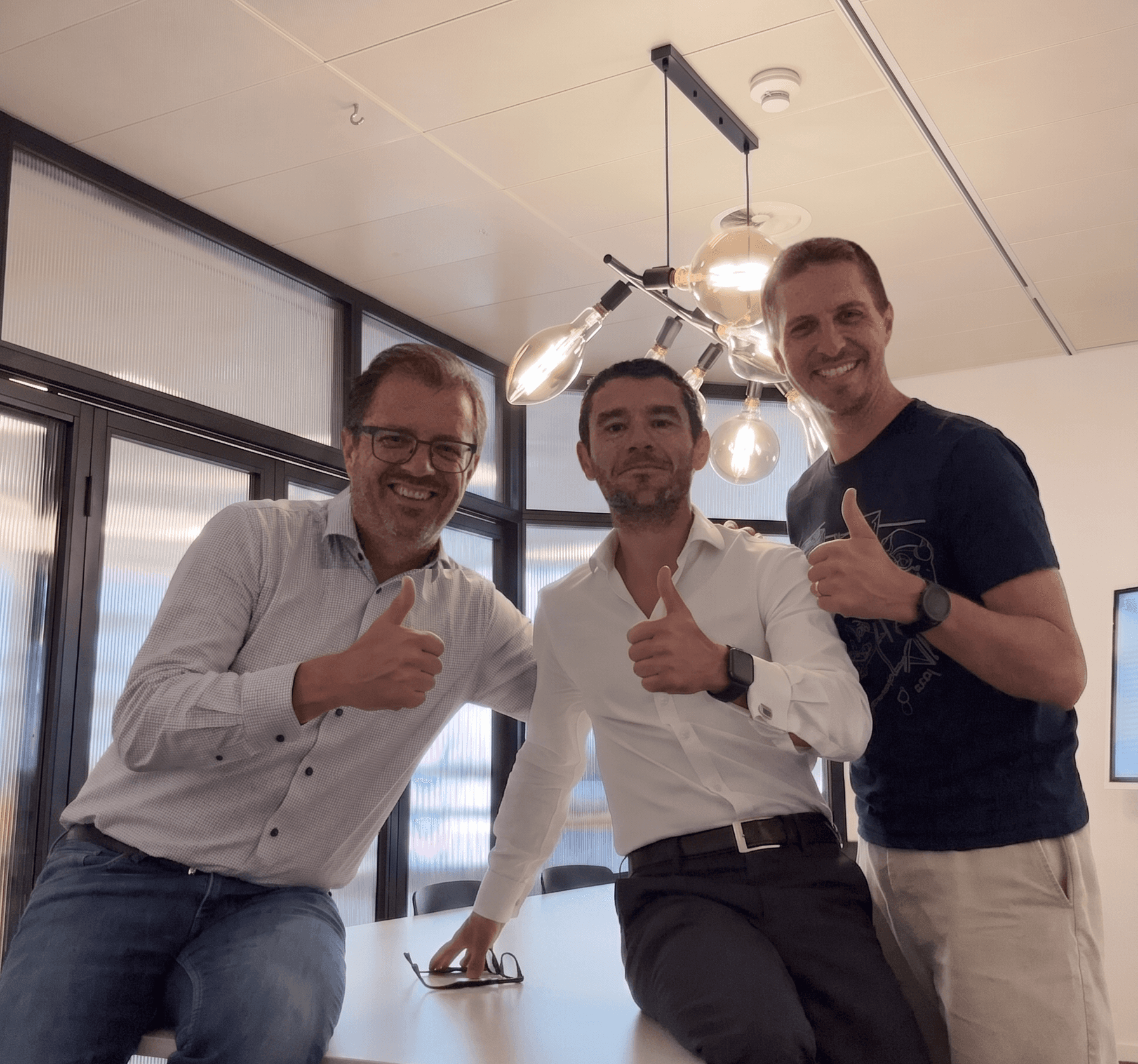
Switzerland has some of the most advanced financial rails in the world—but for local merchants, those rails have become increasingly expensive and opaque. PimPay started from a simple, stubborn question: what if the payment infrastructure were designed first for small businesses instead of intermediaries? In this founders interview, conducted with CEO Maxime Charbonnel, we go behind the scenes of that question. We talk about why now is the moment to challenge decades-old payment structures, why PimPay’s architecture is fundamentally different from existing players, and how a funding strategy built on community and transparency can accelerate a new standard for local commerce. From regulatory positioning to QR adoption, from merchant word-of-mouth to crowdfunding via CLA, this conversation captures how PimPay is being built—deliberately, structurally, and always with the local merchant at the center.
OOMNIUM: You’re challenging a system that has been working for decades—at least for the intermediaries. What convinced you that now is the right time to challenge Switzerland’s payment infrastructure?
Maxime Charbonnel: The timing isn't a bet, it's a structural convergence. Several things happened simultaneously: QR code adoption reached critical mass post-COVID, Swiss merchants hit a wall with card fee inflation that ate into already-thin margins, and local merchants started losing ground to large chains that have the data, the loyalty tools, and the marketing budgets they simply don't have access to.
On the payments side, the system worked for intermediaries because no one had built a credible alternative at the infrastructure level. We didn't invent a new payment method, we rebuilt the rails underneath it, and added the loyalty and visibility tools that let local merchants compete on their own terms.
The moment you can offer a merchant zero transaction fees, a direct line to their customers, and the ability to run loyalty programs that rival what the big chains do, "now" becomes the only rational answer.
OOMNIUM: PimPay positions itself not just as a cheaper alternative, but as a completely new architecture: no acquirer, no issuer, no scheme. Explain to us why an established player like TWINT or Worldline cannot structurally replicate this model.
(M. C.): Because their business model is the intermediary chain. TWINT is bank-owned, its shareholders are the issuers. Worldline's revenue depends on acquiring margins and scheme volume. Asking them to eliminate the acquirer-issuer-scheme stack is asking them to destroy their own P&L. It's not a product decision, it's a structural impossibility.
PimPay was designed from day one with no acquiring license dependency, no card scheme settlement, and no issuer relationship. We operate under an SRO framework that fits our model precisely. A legacy player trying to replicate us would need to spin off a separate entity, strand their existing merchant contracts, and cannibalize their core revenue, all while we're already live and growing.
Join the Private Round
Contact
pauline@oomnium.com
to get the secret link.
OMNIUM: Together, you bring over 85 years of experience in banking, payments, and technology. How did you, as the founding team, divide up the tasks—and when did this experience make the difference?
(M. C.): The founding team splits cleanly along three axes: I lead strategy, fundraising, regulatory positioning, commercial development, and customer experience, drawing on a background in Swiss banking and payments. Maxime Monod owns the full technical architecture, which is where the zero-intermediary stack actually lives. André runs operations and merchant relationships, the ground-level execution that turns a concept into a functioning network.
The experience made the clearest difference during the ARIF/FINMA SRO affiliation process and when structuring the CLA fundraising round. Both required navigating frameworks where getting it wrong early creates compounding problems. Having done this from inside institutions meant we knew which corners not to cut.
OOMNIUM: The CHF 1.5 million funding round is divided into two phases, with a clear allocation of funds: 40% each for marketing and IT, and 20% for operations. Explain to us how this allocation aligns with your specific goals for 2026—and what you aim to achieve by the end of the year.
(M. C.): The 40% on marketing isn't a branding budget, it's merchant acquisition cost. Our unit economics work at scale, so 2026 is about accelerating the network effect. Every merchant we onboard before a competitor does is a durable lock-in.
The 40% on IT funds the features that convert early adopters into sticky users: loyalty module, merchant dashboard, reporting tools. The 20% on operations covers the compliance, onboarding support, and back-office infrastructure that lets us scale without quality loss.
By end of 2026, the goal is clear: a critical mass of active merchants in French-speaking Switzerland, a measurable consumer transaction volume, and the metrics that justify the next funding round on materially better terms.
OOMNIUM: You’ve already generated national media coverage and registered over 150 merchants before the launch, without a public campaign. How did you manage that—and what does that tell you about the momentum PimPay can generate?
(M. C.): Word of mouth inside a community that's been waiting for this. Swiss local merchants talk to each other. Our early outreach was hyper-targeted: direct contact, no intermediary, real conversations about their margin problem.
The media coverage came from the same place, journalists covering the story of a Swiss startup that refused to replicate the existing model. What it tells us about momentum: demand was latent, not created. We didn't convince merchants they had a problem, they already knew. We just showed up with a credible solution at the right moment.
OOMNIUM: What advice do you have for other founders who choose this funding route?
(M. C.): Crowdfunding via CLA is not passive capital, it's a community-building exercise with legal structure attached. The investors who come in at this stage are also your first ambassadors. That means the pitch has to work at two levels: rigorous enough for sophisticated angels, clear enough for someone investing CHF 10’000 because they believe in the project.
The documentation matters enormously, a sloppy SHA or an inconsistent cap table destroys trust faster than a bad product. And don't underestimate the operational load: investor relations, legal back-and-forth, regulatory review, all of this runs in parallel with building the product. Only do it if you have the bandwidth and the right legal partners.
OOMNIUM: Where will PimPay be in five years—and what is the one milestone that will tell you you’re on the right track?
(M. C.): In five years, PimPay is the default payment layer for local commerce in Switzerland, not a challenger, the standard.
The one milestone that signals we're on the right track: the first month where a merchant churns from Twint or a card terminal provider to go exclusive on PimPay. That's when we know we've crossed from "interesting alternative" to "infrastructure." Everything else, user numbers, GMV, press coverage, is directional. That churn moment is structural proof.